

Why a Human Translator Still Matters in the Age of Artificial Intelligence
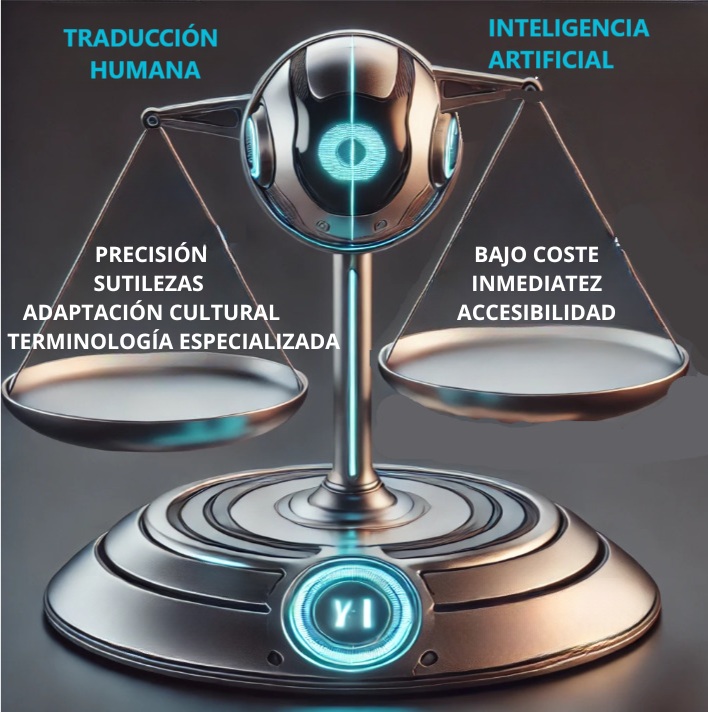
Choosing a human translator over artificial intelligence remains a guarantee of success when it comes to scientific, legal, or professional translations. There are fundamental reasons why human translation continues to be essential in texts where accuracy, interpretation, and accountability matter. Working with a professional human translator can help avoid a wide range of problems.
1. Understanding Context and Interpreting Content
AI can provide fast and instant translations, but caution is required when using it in fields such as scientific, legal, or technical translation, where terminological accuracy is crucial. A human translator understands the concepts, context, and specialized terminology, avoiding errors that AI does not always detect.
AI also struggles to convey the tone, emotion, and style of corporate or advertising texts, since linguistic nuances and subtleties—such as cultural references, idiomatic expressions, and wordplay—are difficult to translate and often require human intervention.
2. Literal Translation
Other common pitfalls of AI translation arise from false friends (for example, success translated as suceso, exit as éxito, or turkey as turco), combined with the inability to select the correct term depending on the context (for example, choosing the appropriate closing greeting according to whether the text is commercial, friendly, or academic in tone).
Be especially careful with AI’s literal translations, as you may come across tourism websites referring to a city’s historic center as the “old helmet.”
3. Privacy Matters
Another important issue is data privacy and security. AI generally requires documents or texts to be uploaded to the internet, resulting in a loss of control over their confidentiality and ownership. As professional translators, we would not recommend using AI to translate legal documents (contracts, agreements, wills, deeds of sale), scientific articles (a translation error can undermine years of research), highly technical documents, or, of course, literary works. Hiring a specialized human translator can save considerable trouble.
4. Responsibility for the Text
Unlike machine translation, a human translator assumes professional responsibility, guarantees confidentiality, and is accountable for potential errors—something that is essential in high-impact documents.
5. The Human Eye
Many texts translated or generated by AI require expert human review to correct inaccuracies, improve naturalness, and ensure consistency. This step makes the difference between a text that is merely correct and one that is ready for publication.
On the other hand, we do find AI useful for speeding up the translation process of large projects by producing a first draft, which can then be reviewed and corrected by a professional. It can also serve as a practical tool for translating less critical texts, such as emails and simple documents where potential errors are unlikely to have significant consequences. Its usefulness should not be overlooked in multicultural communication situations such as travel or brief interactions.
If you need a professional translation reviewed by a human translator specialized in scientific or legal texts, you can contact us here.