

HOW TO WRITE A SCIENTIFIC ARTICLE
Do you want to learn how to write a scientific article section by section? In this guide, your trusted Spanish-English scientific article translator offers you the keys to writing a scientific article to find the ideal structure and writing style. Furthermore, having professional help to write a scientific article significantly increases the chances of acceptance in scientific journals.
ARTICLE TITLE
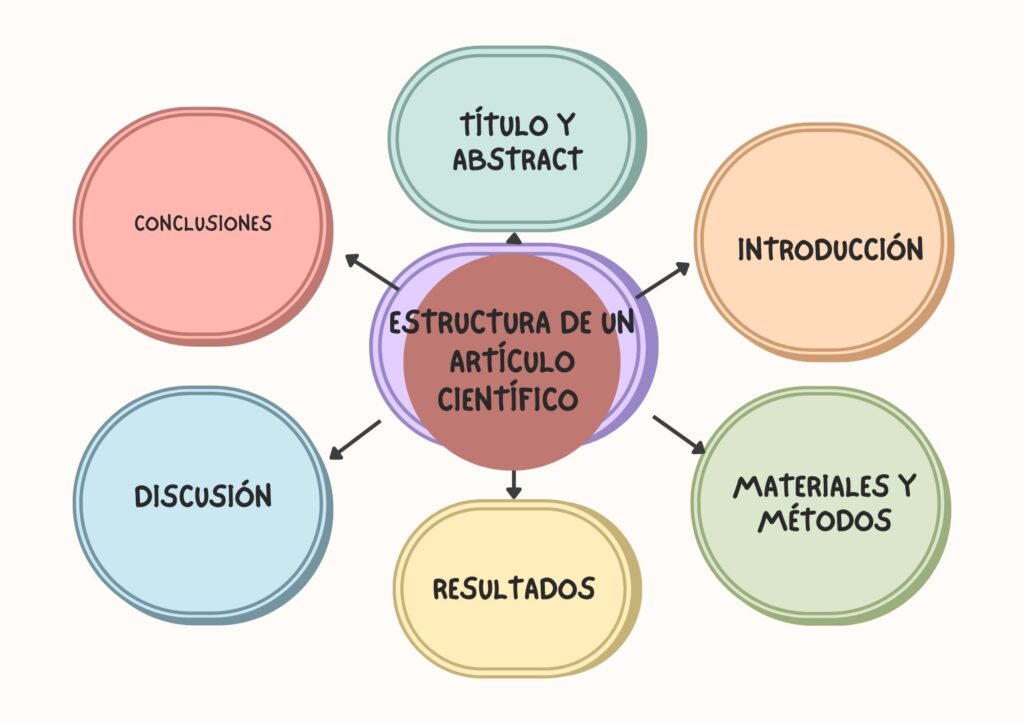
| Preliminary sections | -Title -Author(s) -Affiliations -Corresponding author -Summary (abstract) |
| Manuscript body | -Title (repeated) -Materials and methods -Results -Discussion -Conclusions |
| Final sections | -Acknowledgements -Funding -Conflicts of interest -Bibliography |
Choose a title that captures the main idea of the study, either as a question (e.g. “Is dentine thickness related to dental sensitivity after whitening treatment?”), or as a neutral title (e.g. “Evaluation of enamel thickness in first permanent premolars”). It should be a concise title that precisely summarises the content of the article. It is recommended that the title also appears translated into English to give the article greater visibility.
ABSTRACT
Next, the abstract or summary is included, which as a general rule should not exceed 250 words. It consists of the following sections: brief introduction, objectives, materials and methods, results and conclusions.
AUTHORS LIST
Next, we provide the list of authors, with the principal author listed last, indicating the affiliations of each one (i.e., the institution to which they are attached). Likewise, the corresponding author must be identified, providing their contact details (email address and/or postal address).
KEYWORDS
Below the abstract, up to six keywords are included in alphabetical order, which are used for indexing the article (e.g., “dentine thickness, sensitivity, whitening treatment”). Keywords are vital for the article to appear in search engines, give it visibility and contribute to increasing the number of citations.
LIST OF ABBREVIATIONS
Subsequently, an alphabetical list of the abbreviations used in the body of the article must be included, with their meanings (e.g., “OB – oral biology; DP – dental pathology; VAS – visual analogue scale”)
The article follows, repeating the title. The sections of a manuscript are:
INTRODUCTION
Introduction, in which we answer the question what is the knowledge gap we intend to fill? It is necessary to provide context — why was the study needed? What research question does it address? Likewise, reference should be made to previous studies, if any, with the contributions made by them and adding the corresponding references and citations. Finally, the objectives of the study are described and the hypotheses are put forward.
MATERIALS AND METHODS
Next, the Materials and Methods section is included. In this section, the type of study conducted must be stated (clinical trial, systematic review, cohort study, case-control study, cross-sectional study, case series, or clinical case report), and its characteristics (analytical or descriptive, experimental or observational, cross-sectional or longitudinal, retrospective or prospective, multicentre or single-centre, blinded or not, single-arm, whether randomised or not, whether there is a control group or not). Likewise, the study period must be specified, i.e., the start and end date, and the location where it was conducted (tertiary hospital, primary care centre, location). Example: “Between May 2022 and May 2024, we conducted a randomised, multicentre, single-arm phase 2 clinical trial at a tertiary hospital in the city of Granada. The study included 250 patients with dental conditions…”
A description of the clinical techniques used must be included, and the statistical analysis method performed must be described. The types of statistical analysis are, according to function, exploratory, inferential, descriptive, predictive, causal, mechanistic. According to the number of variables, univariate, bivariate or multivariate.
Next, the number of patients included in the study and their demographic characteristics (age, sex) are indicated, in addition to clinical data (analytical results, presence of comorbidities, age at diagnosis) and follow-up period.
RESULTS
This section answers the question what results have been obtained? Data and results are presented objectively, which must match the study objectives. It is advisable to add tables and graphs showing the data. It is very important to highlight the statistically significant differences, as these objectively support the study conclusions. Example: “A total of 123 patients (73%) improved their dental condition with the new treatment, with statistically significant differences compared to the control group (p value)”.
DISCUSSION
Subsequently, add the Discussion section — What do the results obtained indicate? In this section the results are interpreted, they are related to findings from previous studies (“the results obtained are consistent with those provided by”) and a subjective judgement is included (“these data demonstrate that…”)
CONCLUSIONS
The article closes with the Conclusions section, which summarises the study and the findings (“According to the results of this study, treatment X significantly improves clinical outcomes in patients with dental conditions”).
Depending on the guidelines of each journal, a section on acknowledgements, funding, conflicts of interest and ALWAYS the bibliographic references may be included.
Do you now know a little more about how to write a manuscript? You can make an initial draft and we will give it the polish it needs to prevent journals from rejecting it, or commission the translation of your article to a medical translator specialised in scientific translation. We are here to help!
We work with researchers, research groups and professionals in the biosciences field who need to write a clear, structured and publishable scientific article. The service is tailored to the stage your manuscript is at: from the initial drafting to the final review before submission to the journal.